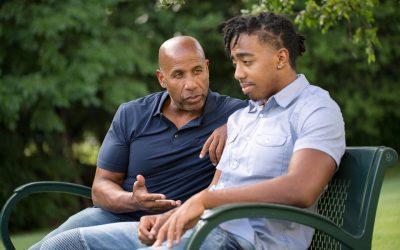
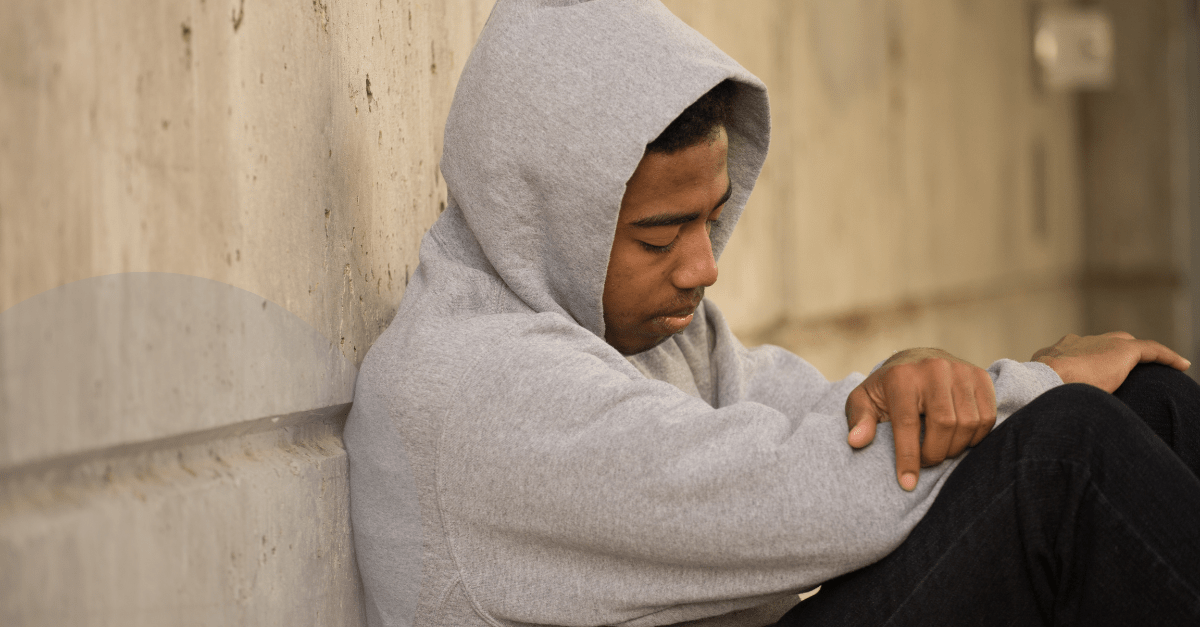
When a teenage boy doesn’t come to school, we notice his absence — but not that he was up all night caring for younger siblings while his mom worked the late shift. A young boy shuts down when asked how he feels because he’s used to being told to “shut up.”
Adults often label these moments as noncompliance, defiance, or behavioral concerns. Those labels set young people on paths toward disciplinary escalation, justice involvement, and family disruption.
But what if what we’re seeing is not disorder, but overload? What if the child is not the problem, but the one carrying the weight?
Schools, healthcare systems, juvenile justice agencies, and even families often expect Black children to function like adults before they are ready. Adults often see Black children as older, stronger, more threatening, and less in need of protection.
This is adultification. The harm isn’t just that Black young men are expected to grow up too fast. It’s that we’ve built systems that mistake distress, trauma responses, and developmental overwhelm for defiance or pathology.
What Adultifying Black Youth Looks Like
Adultification happens when adults stop seeing the child beneath the behavior. Instead of recognizing untreated trauma, dysregulation, or chronic stress, systems label youth oppositional or resistant — too often diagnosing Oppositional Defiant Disorder or conduct disorders. It happens in classrooms where students are disciplined before anyone asks what they’re carrying, in justice systems that punish rather than heal, and in homes where poverty forces children into adult roles early.
It also happens where poverty is not the pressure. Black families with resources adultify their children too — out of love and fear, not neglect. Parents who know how systems misread Black boys teach their sons to manage their tone before they can name their feelings, to appear composed when afraid. This protective adultification comes from a rational place, but the cost is real: a childhood spent rehearsing for scrutiny is still a childhood cut short. Systems see exactly what his parents trained him to show — composure, control, self-sufficiency — and conclude he needs less care, less patience, less protection.
Many adults in helping positions are afraid of these boys — not teenagers with records, but ten- and eleven-year-olds. Research shows that adults perceive Black boys as older and less innocent than their white peers from around age ten. A fearful adult keeps distance, manages instead of mentors, refers out instead of leaning in. The boy feels it — children always do — and stops reaching; Teachers, clinicians, or caseworkers document his withdrawal as resistance, and the file grows.
You cannot heal a child you are afraid of. And a child cannot heal in the presence of someone who fears him.
This does not end at eighteen. In college, I mentioned to my psychiatrist — a white woman — that I’d gotten into a couple of fights growing up. Her response: consider discontinuing the medications I had carried for twelve years, because she didn’t like prescribing controlled psychotropics to “aggressive” clients. She moved me from patient to category in a single sentence.
Behavior Is Communication
A young person who pushes back may be protecting themselves. A child who appears angry may actually be ashamed, afraid, or tired of being misunderstood.
I once worked with a young man labeled violent because he cursed out a teacher who made him read aloud. On paper, it read as aggression. The truth surfaced at a restaurant, when the menus came and he set his down and said, “I’ll just order whatever you have.”
He couldn’t read.
The explosion was a boy protecting his dignity with the only tool that had ever worked — not a problem, but the solution he’d engineered to a systemic failure.
Why Context Matters
CBT and similar approaches are powerful, but moving too quickly to correct thoughts and behaviors — before understanding trauma, poverty, grief and family stress — risks pathologizing survival.
A young man who believes he can’t trust anyone and must handle everything himself might be told he’s overgeneralizing. But if he has watched adults leave and learned that asking for help invites danger, that belief kept him safe. Asking him to abandon it before safety exists elsewhere isn’t therapy — it’s asking him to disarm in a world that hasn’t stopped being threatening.
Healing begins with context: understanding what young people have had to do to survive before asking them to change.
GRO’s Approach Starts with Safety
Most approaches begin with behavior and miss the most important question: Is this person safe enough to engage in change?
At GRO Community, emotional safety comes first. Regulation, insight, and accountability are not entry points into healing; they are outcomes of it. Accountability without safety produces compliance, not healing — and compliance is one-dimensional and hard to generalize.
A young man can know he is angry, feel it fully — and still decide how that anger shows up in a classroom, a courtroom, or a traffic stop. That is not suppression; that is power. Regulation should come from self-knowledge, not fear.
We cannot separate healing from family systems. The disruption of the Black family has never been an accident. Enslavement separated children from parents as commerce. “Man-in-the-house” welfare rules made a father’s presence a financial liability. Mass incarceration removed fathers, sons, and brothers at a scale no community could absorb. Quieter still were narratives pitting Black men and women against each other; when a community locates its wounds in itself, the home stops being a refuge. Naming that history lifts blame off the family and places it where it belongs.
Family therapy at GRO is not about changing who families are. It strengthens what already exists, reduces harmful cycles, and builds emotional safety within the system that raised the child. It also honors the courage it takes to show up: therapy has never been neutral space for many Black families, and opening your home to someone who can write reports about you is not compliance — it is bravery.
And youth healing requires caregiver healing: untreated trauma, grief, or chronic stress shapes the emotional environment of the whole home, and when caregivers have space to heal, the entire system heals with them.
Protecting Childhood
Time to ask better questions. What has this young man experienced? What must be in place before accountability is expected?
Protecting childhood isn’t about lowering expectations for Black youth. It’s about giving them what every child deserves: the chance to heal before they’re asked to carry the weight of adulthood.
This is not abstract for us. When a family enters our care, we don’t start with a behavior plan — we start in their living room. Our clinicians work with the whole family while our youth specialists meet young men at school and in the community. We answer the phone when a family is in crisis at nine o’clock at night, because engagement is treatment, and trust is built in exactly those moments.
When we stop mislabeling distress, we make room for accuracy and effective intervention — and we give young men back the childhood systems too often take before it’s finished.
Max Pardo Hornung, LCSW, is the Director of Family Services at GRO Community, where he leads family-centered, community-based mental health services for Black and Brown youth and families. Born and raised on the South Side of Chicago, he brings lived experience and deep community roots to his work.
He earned his undergraduate degree from Tufts University, where his early work centered on prison justice, mentorship, and advocacy, shaping a lifelong commitment to equity, accountability, and community-centered healing. He later earned his Master of Social Work from the University of Chicago, concentrating in community mental health.
At GRO Community, he founded a music-based therapeutic program that uses creative expression to support emotional regulation, trauma processing, and engagement among youth. Grounded in lived experience, he approaches his work with humility, authenticity, and a belief that healing happens most powerfully within families and communities.