
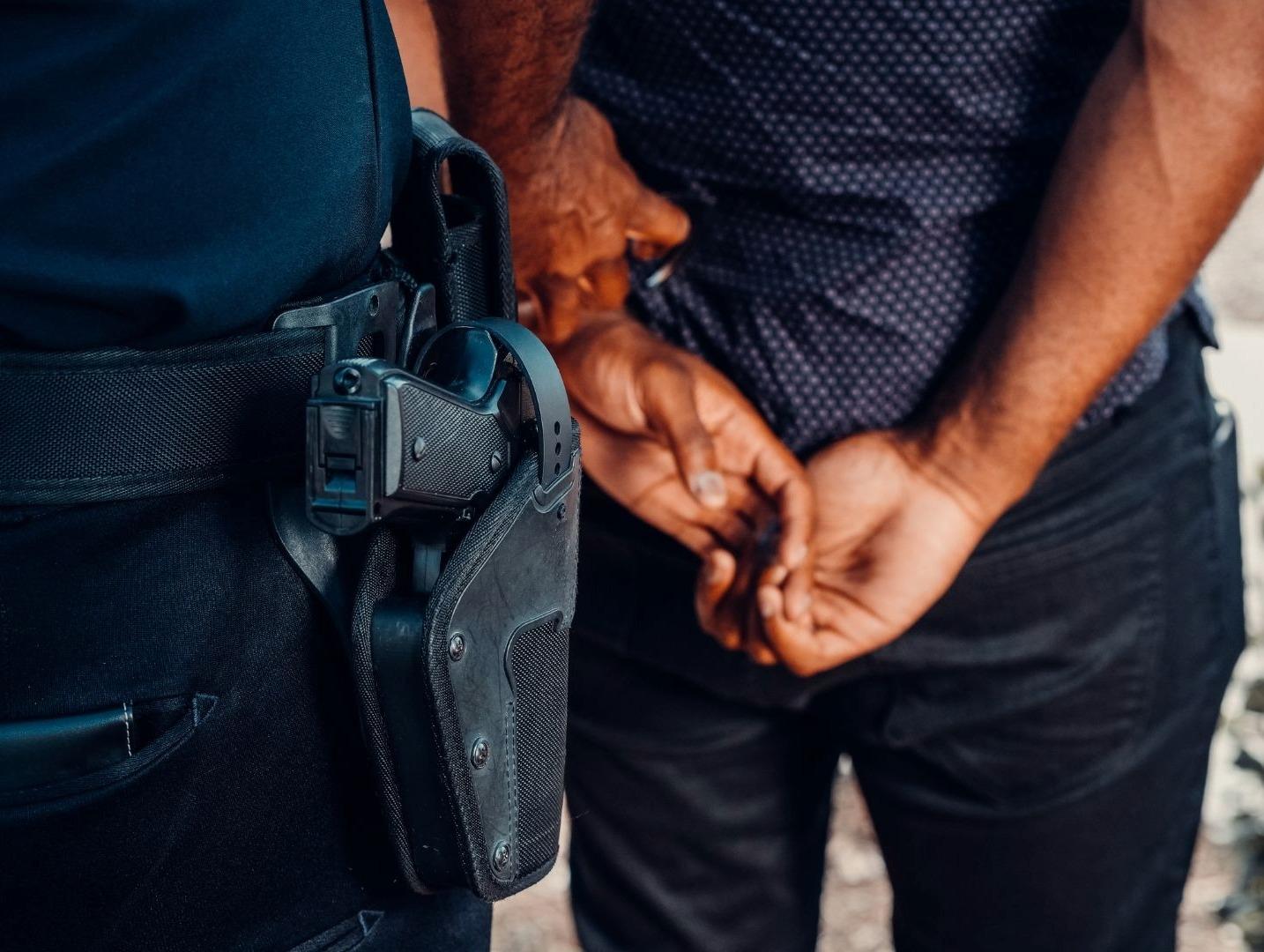
“I got shot before… I just didn’t want that to happen again. Rather be safe than sorry.”
For Patrick, a 25-year-old man from Chicago, carrying a firearm had nothing to do with him wanting to hurt someone. It was about what he had already experienced.
Chicago has spent years trying to address gun violence through law enforcement, violence prevention and community intervention. In 2025, Chicago recorded 417 homicides and 1,850 shootings. While this is a decline from the previous year, this violence remains concentrated in neighborhoods that experienced it for generations. To date, Chicago recorded 289 homicides through the end of August, which is comparable with what was seen in 2025.
This progress matters, but fewer shootings won’t erase the real fear from people who experienced violence firsthand, watched family and friends become victims, or learned the hard way that help doesn’t always arrive when needed.
This reality raises a question that deserves more attention in conversations about illegal firearm possession: What happens when people begin carrying firearms because they don’t believe they’re safe without them?
This is not an attempt to excuse illegal firearm possession. The law is important, and we are responsible for following it. However, if the goal is to reduce the number of people carrying firearms illegally, arresting people only addresses one part of the problem. We would be remiss if we did not also understand what happened before the arrest and why they decided to carry in the first place.
Fear Changes What Safety Looks Like
The connection between exposure to violence, firearm carrying, and perceptions of safety is documented with research.
A 2024 study of 266 violence-involved youth in Chicago found that both experiencing and witnessing violence were associated with weapon carrying. However, the study by GRO Community CEO Aaron Mallory, Bureaucratic Barriers and Inequality: Understanding Illegal Firearm Possession Among Low-Risk African American Men, asks a different and important question: What happens when that fear and perceived need for protection follows someone into adulthood, even when that person does not fit the profile of someone typically considered high risk? The findings don’t imply that everyone exposed to violence will carry a firearm but instead challenge the idea that carrying a firearm automatically indicates criminal intent.
For some, the decision to carry is shaped by how they perceive their own vulnerability. In fact, the study examined 29 African American men in Chicago who had been arrested for unlawful firearm possession, and 96 percent were classified as low risk using validated risk assessment measures.
These men did not fit the profile many people might expect when they hear the phrase “illegal gun possession.” In fact, most of the participants were employed and did not have histories of violent crime. They were information technology professionals, postal workers, security guards, entrepreneurs and real estate investors.
They shared something more than simply being employed though: they didn’t feel safe.
When someone lives in an environment where violence (or the threat of violence) is frequent, carrying a firearm can feel like a form of protection. Participants described being victims of violence themselves or watching friends and family members become victims. Some also described experiences with law enforcement that led to distrust and the belief that they had to protect themselves and their families.
“It’s like all they see is a Black person with a gun. They don’t care that I’m just trying to protect myself. They don’t know that I got three daughters and a son at home. They don’t know that I work in IT [information technology] and that I am also a real estate investor,” said Thomas, 33, another participant in the study.
What Happens When Compliance Has Barriers?
The Bureaucratic Barriers and Inequality research also challenges the idea that these men simply chose not to follow the law. Most were trying.
In fact, 62 percent legally owned their firearms through a Firearm Owner’s Identification (FOID) card but had been arrested for carrying without the concealed carry license required to do so. Those participants believed their FOID allowed them to carry. Some had applied for a concealed carry license and were waiting. For others, the cost of required training and licensing created a barrier.
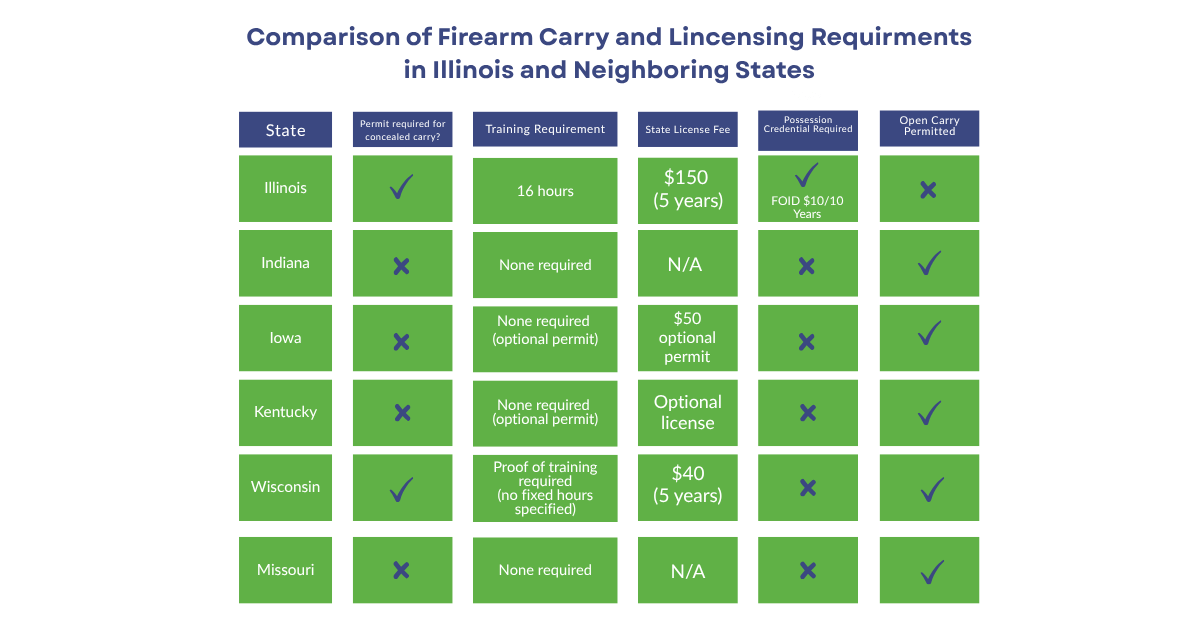
Illinois law makes an important distinction: a FOID permits eligible residents to acquire and possess firearms, while a concealed carry license is required to carry a concealed firearm. Navigating that distinction requires knowledge, time and, for CCL applicants, a 16-hour training course and a $150 application fee, among other costs.
It’s important to note that neighboring states don’t have the same barriers to carrying a firearm. In comparison to Indiana, Iowa, Kentucky, Wisconsin and Missouri, only Illinois and Wisconsin requires a CCL and proof of training. The state license fee is optional in Iowa an optional $50, and in Wisconsin the fee is $40 and lasts five years; there is not a state license fee in Indiana or Missouri. Illinois is the only state that requires a FOID card.
Mallory calls this bureaucratic disenfranchisement: when costs, complexity and delays make it harder for people to comply with systems they are expected to navigate.
We often treat compliance as simple: the law exists, people know it, and they either follow it or they do not.
Real life is rarely that simple.
Who Pays the Price for Enforcement?
Firearm-possession enforcement also raises a question about who bears its consequences.
Between 2014 and 2024, more than 47,500 people were arrested for common firearm-possession charges in Chicago, and approximately 81 percent were Black, despite Black Chicagoans making up less than one-third of the city’s population.
That disparity exists alongside another reality: Black Chicagoans also experience a disproportionate share of gun violence. In 2025, Chicago’s homicide rate was 39.5 per 100,000 for Black residents, compared with 9.3 for Latino residents and 1.8 for white residents.
The reality is that Black communities need protection from violence, and they also need public safety strategies that account for the fear, trauma and barriers to legal compliance with Illinois firearm laws.
Law enforcement cannot be the only intervention.
Legal education, clearer licensing information and easier access to the process of lawful compliance can help prevent violations before they become arrests. Violence prevention and mental health services can also address the fear and trauma that can shape decisions to carry.
Instead of responding after someone violates the law, the goal should be to reduce the conditions that make illegal carrying feel necessary in the first place.
Look Before the Arrest
An arrest tells us what law was allegedly violated. It does not tell us why someone carried a firearm.
This research puts that distinction into focus. The participants in this research described fear, exposure to violence, distrust in law enforcement and difficulty navigating firearm regulations.
Understanding those circumstances does not excuse illegal possession, but it gives us more information about how to prevent it.
If Chicago wants fewer people carrying firearms illegally, we have to look at what happened before the arrest: why do people carry, what stands in the way of compliance and what would make them feel safe enough not to.